Why Are Avian Vets So Hard to Find? A Vet's Honest Answer
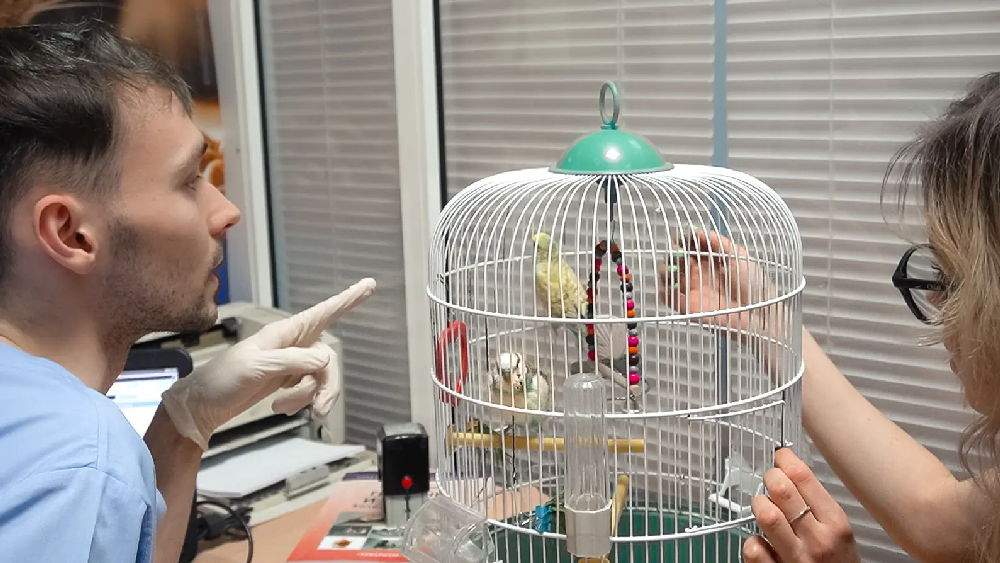
I get this question more than almost any other. A parrot owner discovers their bird is unwell, opens Google, types "avian vet near me" — and finds nothing within a hundred miles. They call the closest general practice. The receptionist says they'll take a look. And somewhere in that chain, things go wrong.
I've spent nearly two decades in avian and exotic animal medicine. So let me give you a real answer, not a press-release version: the avian vet shortage is structural, it's getting worse, and it has nothing to do with birds being unpopular or hard to love. It has everything to do with how veterinary medicine is built — and who that system was designed to serve.
The Numbers First
Let's start with a fact that still shocks people when I mention it. There are fewer than 100 board-certified avian veterinarians worldwide. Around 85 of them practice in the United States. The US alone has roughly 2.1 million bird-owning households. Do that division.
Even if you count veterinarians who regularly see birds without formal board certification — a larger group, certainly — qualified avian practitioners are a vanishingly small fraction of the total veterinary workforce. The imbalance between supply and demand is not a quirk. It's a structural outcome of decisions made decades ago, at the level of veterinary education, professional incentives, and market economics. All three are broken in the same direction.
The Veterinary School Problem
Here is what a typical veterinary student learns about birds during four years of training: almost nothing. Not because birds are rare — they're the third most common companion animal in many countries — but because the curriculum was built around dogs, cats, cattle, and horses. Those are the revenue-generating species. Those are the animals that built veterinary medicine as a profession.
Birds receive, at best, a handful of lecture hours across four years. Most of the meaningful content is offered as an elective — something students pursue at their own expense and in their own time, after an already gruelling programme. The institutional assumption embedded in this curriculum design is that birds are peripheral. A footnote. An interesting edge case.
I can tell you from experience that this assumption is catastrophically wrong. Avian physiology, diagnostics, and pharmacology differ from mammalian medicine so substantially that a veterinarian trained only in dogs and cats is not slightly less equipped to treat a parrot — they are working in a different discipline. A bird hides illness until it is critically unwell. Its air sac system, its unique hepatic metabolism, its response to common drugs — none of this maps onto what a general practitioner learns. And yet most new graduates emerge from school believing they can manage a bird exam on common sense and a quick internet search.
The consequence is predictable. An owner brings in a cockatiel showing early signs of parrot losing feathers or subtle digestive changes. A well-meaning general vet examines it, finds nothing obvious, and sends it home with reassurance. Three weeks later, the bird is critically ill — and by then, the window for effective treatment has often closed.
The Training Pipeline Is Broken
Even for students who develop a genuine interest in avian medicine, the pathway to becoming a qualified avian vet is long, expensive, and deliberately narrow. To sit for board certification through the American Board of Veterinary Practitioners, a veterinarian must either complete an approved residency programme or accumulate six years of documented clinical practice in avian medicine, supplemented by case reports, professional education records, and peer review. The full post-graduate investment can run to six years beyond veterinary school.
Residency positions in avian and exotic medicine are extremely scarce. Most are attached to university teaching hospitals or large specialty practices, and there are simply not enough of them to train practitioners at the rate the field needs. A student who graduates passionate about birds may spend years unable to access the supervised clinical experience that a formal qualification requires.
Extra coursework in exotic and avian medicine is typically not funded by veterinary schools — students pay out of pocket, on top of tuition debt that routinely reaches six figures. The incentive structure actively discourages the choice. And those who do push through it emerge into a job market with specific constraints of its own.
The Economics Don't Add Up
I want to be direct about something the profession doesn't always say out loud: the economics of avian medicine are genuinely difficult. Not impossible — but structurally challenging in ways that discourage investment.
Consider what a qualified avian vet actually needs to run a competent practice. Specialised equipment for working with small patients. A laboratory relationship capable of processing avian samples, since many routine tests must be sent to specialist labs, sometimes overnight. A team comfortable handling birds — restraint technique alone requires specific training, because incorrect handling can be fatal. And a client population that is substantially smaller than that of a general small animal practice.
The bird-owning market, while passionate and often willing to invest in good care, is a fraction of the dog-and-cat market in raw numbers. Birds account for about 1.6% of pet-owning households in the US — roughly 2.1 million households compared with tens of millions of dog or cat owners. A business built primarily on avian practice serves a smaller pool, with higher overheads per case, in a market where clients may not yet understand why specialist care costs more than a standard dog appointment.
Corporate veterinary groups — which now own an increasing share of general practices — have little incentive to invest in avian capability. Many corporate clinics simply instruct their general vets to see exotic animals as part of their caseload, without any additional training or equipment. This creates a visible supply of "bird vets" that isn't real — names on a list, practices that will technically accept a bird appointment, but without the depth of knowledge to manage anything beyond a basic wellness check.
The Geography Trap
What the shortage looks like nationally is uneven concentration. Qualified avian practitioners cluster in large cities, near university veterinary hospitals, and in areas where the density of exotic pet ownership is high enough to sustain a specialist practice. Outside those areas — in rural regions, smaller cities, and large parts of the developing world — the effective number of qualified avian vets is often zero.
This is not just an inconvenience. Finding an avian vet near you is a real challenge that many owners discover only at the worst possible moment — when their bird is acutely ill and transport itself becomes a risk. A parrot that is already compromised by illness does not travel well. Stress, temperature fluctuation, and handling during a long journey can tip a critical bird into irreversible decline before it reaches care.
Online consultations have changed this calculus meaningfully for some owners. Not as a replacement for hands-on examination and diagnostics — those remain essential for many conditions — but as a way to access expert guidance quickly, to determine whether emergency travel is warranted, and to manage ongoing conditions in patients who cannot safely visit a clinic regularly.
The Danger of the Generalist
I want to address something that comes up constantly in owner communities: the belief that any vet who "sees birds" is an adequate option. I understand why this belief is appealing — it's reassuring, and in some cases it may be true. Some general practitioners have invested genuinely in self-education about avian medicine and manage to do competent work within their knowledge limits. They know what they don't know, they refer appropriately, and they don't overstep.
But in my experience, this is the exception rather than the rule. More commonly, what happens is that a generalist examines a bird, does not find an obvious dog-or-cat analogue for the presentation, and either misdiagnoses or dismisses the problem. This is not a moral failing — it's a knowledge gap, and it's not their fault it exists. The fault lies upstream, in a training system that left them unprepared.
The consequences for bird owners can be severe. I've seen cases where the dangers of relying on internet advice for a sick parrot — or worse, a generalist's confident but uninformed reassurance — delayed treatment until the bird was beyond saving. Diseases like proventricular dilatation disease, Knemidocoptes mite infestation, and early-stage hepatic lipidosis present subtly in birds. They require clinical suspicion built on avian-specific experience, not a generic examination protocol applied hopefully to an unfamiliar species.
What You Can Do Right Now
The structural problems I've described won't be fixed quickly. Veterinary curricula change slowly. The pipeline of new avian practitioners is narrow. The economics will continue to disfavour building specialist avian practices in smaller markets.
What you can control is your own preparation:
Find your nearest qualified avian vet before you need one. Not when your bird is sick — now, while you have time to research properly. Ask about their avian caseload, their lab relationships, their emergency cover. A vet who sees five birds a year and twenty dogs a day is not an avian vet, whatever they call themselves.
Understand the limits of the vet you have access to. A good general practitioner near you may be genuinely useful for basic wellness and minor presentations, but should not be your first call for a bird showing acute neurological signs, significant respiratory compromise, or rapid weight loss.
Consider online specialist access as part of your plan. An online avian vet consultation can provide species-specific triage, help you interpret concerning signs, guide you on whether transport is safe, and give you a treatment framework to bring to a local vet who may be willing to follow expert direction. This model works well because birds' presenting signs are often visible — posture, feather condition, droppings, breathing rate — and can be assessed remotely with useful accuracy by a clinician who knows the species.
Don't wait. Birds are physiologically adapted to hide weakness. By the time an owner notices obvious signs of illness, the bird has usually been compensating for days or weeks. What looks like a sudden deterioration is almost always a late presentation of something that started much earlier. Speed of response matters more in avian medicine than in almost any other companion animal species.
The shortage of avian vets is real, and it's going to remain real for the foreseeable future. But how much that shortage affects your bird's outcomes is, to a meaningful degree, something you can influence — through preparation, through knowing what you're looking for, and through building specialist access into your care plan now rather than in a crisis.
Frequently Asked Questions
Why are there so few avian vets?
Because veterinary school curricula are built around dogs, cats, and livestock — birds receive minimal formal training time, avian electives are self-funded by students, and residency positions in avian medicine are extremely scarce. The training pipeline produces very few qualified avian practitioners each year, and the economics of running a specialist avian practice are difficult in all but the largest cities.
How many board-certified avian vets are there in the US?
Fewer than 90 board-certified (ABVP Avian Diplomate) veterinarians practise in the United States. There are fewer than 100 worldwide. This figure covers only formal board certification — a larger group of vets work with birds without that credential, with highly variable levels of experience.
Is a general vet OK for a pet bird?
For basic wellness checks, a general practitioner with some bird experience may be adequate. For anything beyond that — respiratory illness, weight loss, neurological signs, skin or feather problems, digestive issues — a vet without specific avian training is likely to lack the clinical knowledge to diagnose correctly. Birds present very differently from mammals, and mistakes made early in a workup are often irreversible.
What should I do if there is no avian vet near me?
First, identify the nearest qualified avian vet and understand the logistics of reaching them in an emergency. Second, consider building a relationship with an avian specialist through online consultation — this gives you expert triage, treatment guidance, and support that can be coordinated with a willing local vet. Third, do this before your bird is sick, not during a crisis.
Can avian vets do online consultations?
Yes, and for many presentations, remote consultation with an experienced avian specialist is genuinely useful. Posture, breathing, droppings, feather condition, and behaviour can all be observed on video. An experienced clinician can assess urgency, guide you on what to do next, and provide a framework for a local vet to work from. It doesn't replace hands-on examination for conditions requiring physical diagnostics, but it often provides critical guidance when access to in-person specialist care is limited.
Will the avian vet shortage get better?
Not quickly. Changing veterinary curricula is slow. Residency positions are tied to institutional investment that isn't increasing fast enough. And the market economics that disfavour avian specialist practices in smaller cities haven't changed. The best near-term development is the growth of telehealth access, which allows a small number of specialist practitioners to serve a geographically distributed patient population.
Key Takeaway: The scarcity of avian vets is not an accident — it's the predictable output of a veterinary education system that has never treated birds as a priority, combined with economics that make specialist avian practice difficult to sustain outside major urban centres. Fewer than 100 board-certified avian practitioners exist worldwide for millions of bird-owning households. The practical response is preparation: identify your specialist resources now, understand the real limits of generalist care, and build remote expert access into your plan before you face an emergency.