 Don't wait
Before → After
Don't wait
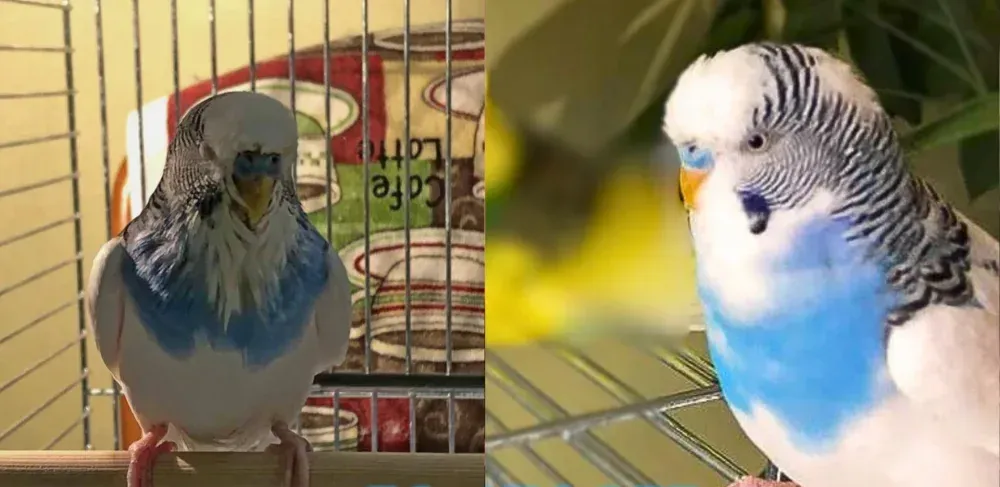
Before → AfterThe budgie who stopped perching.
The single most common way a bird admits it is ill — and it almost never means “just tired”. Same bird on the right, after treatment.
If something feels wrong, describe what changed. Dr. Alex Strelkov will review the history, photographs, video, and test results personally.
Written for the pharmacy near you.
The same medicine carries a different brand name in every country. Your plan names the ones sold where you live.
Two short steps now. The full clinical questionnaire opens immediately after secure payment.
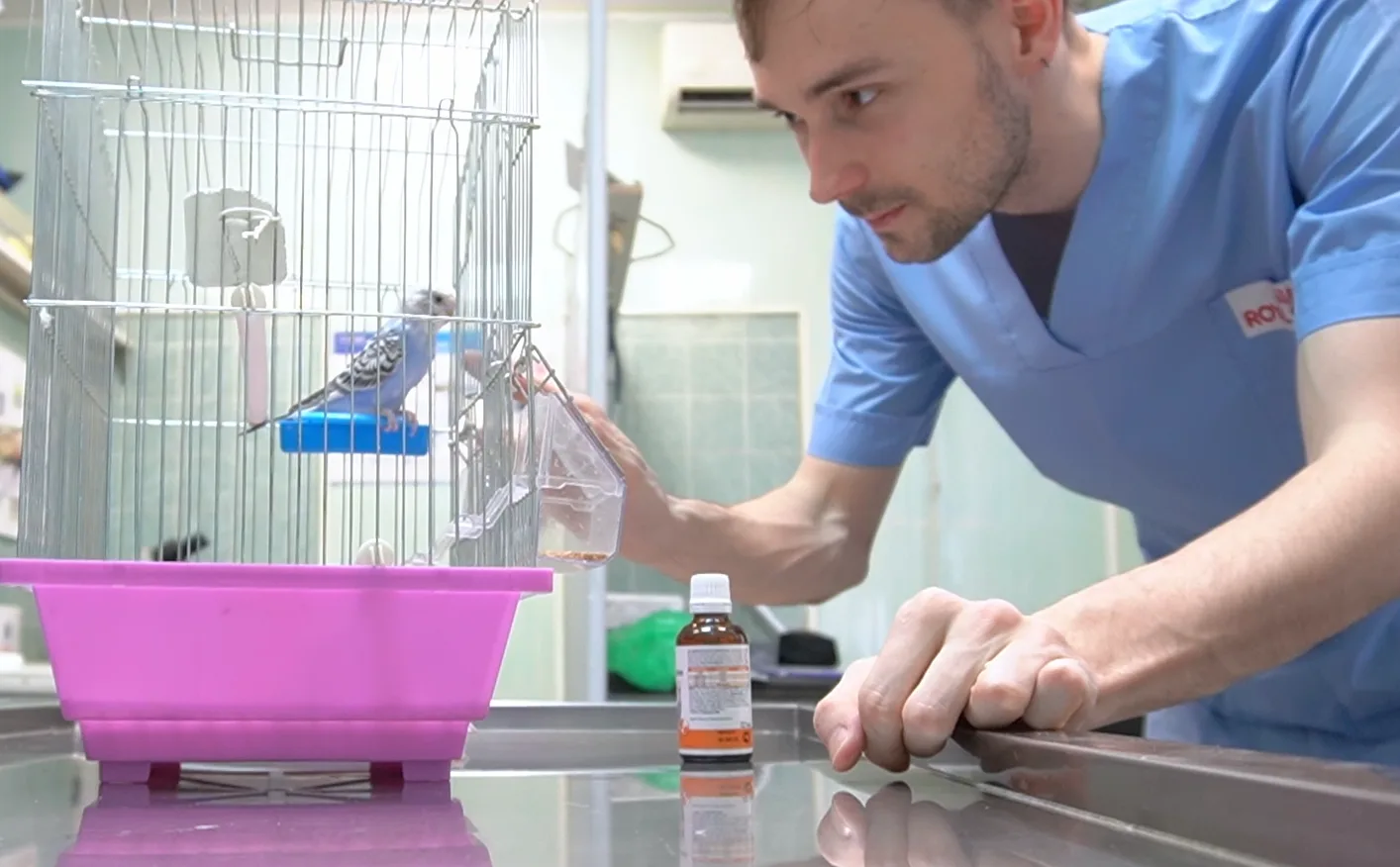
Start with the priorities and red flags, then swipe through the clinical reasoning, diagnostics, treatment considerations and follow-up plan in this complete report example.
Every report is tailored to the current situation and designed to guide your next steps. If hands-on care is needed, it also helps you continue care efficiently with any local veterinarian.
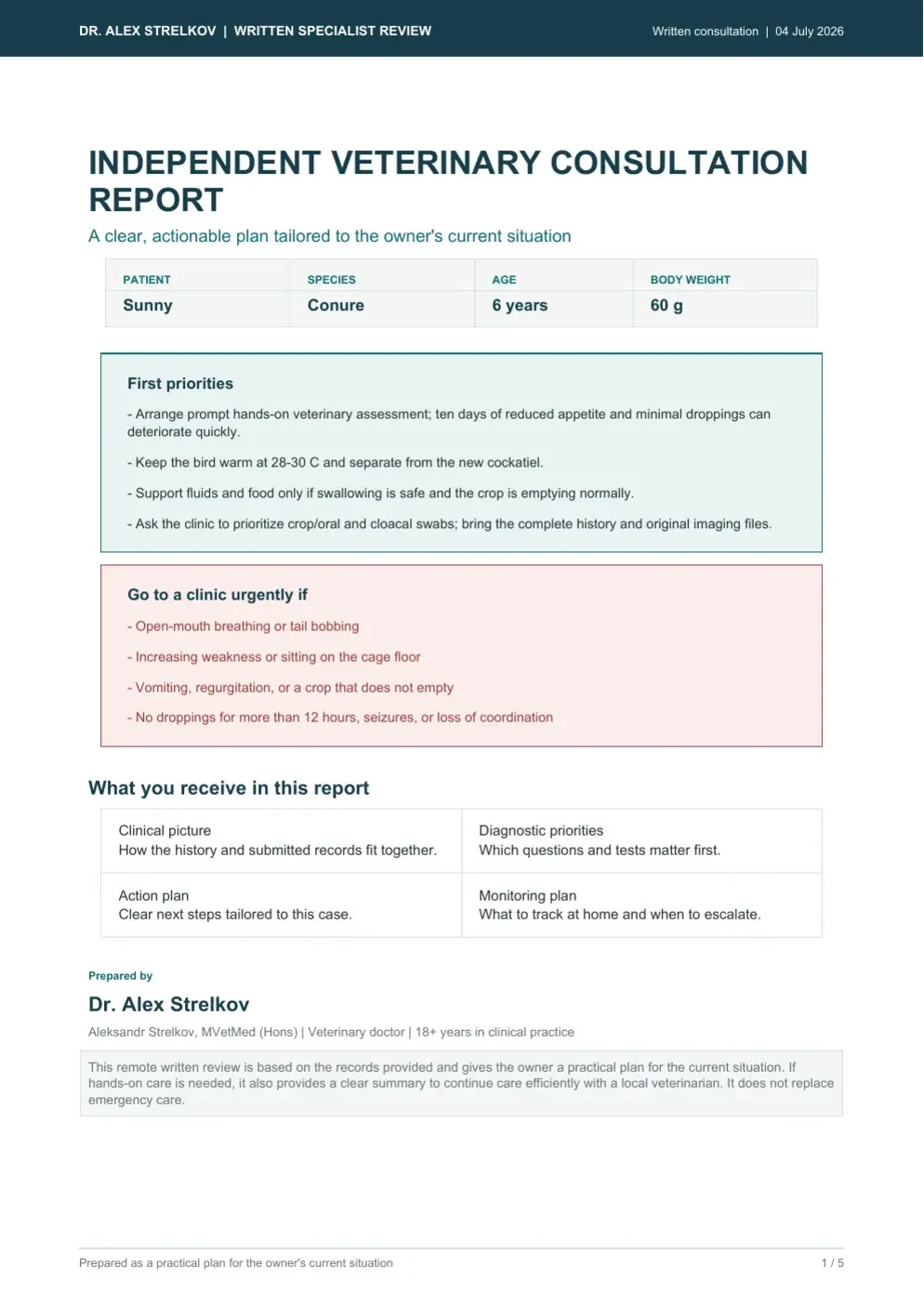
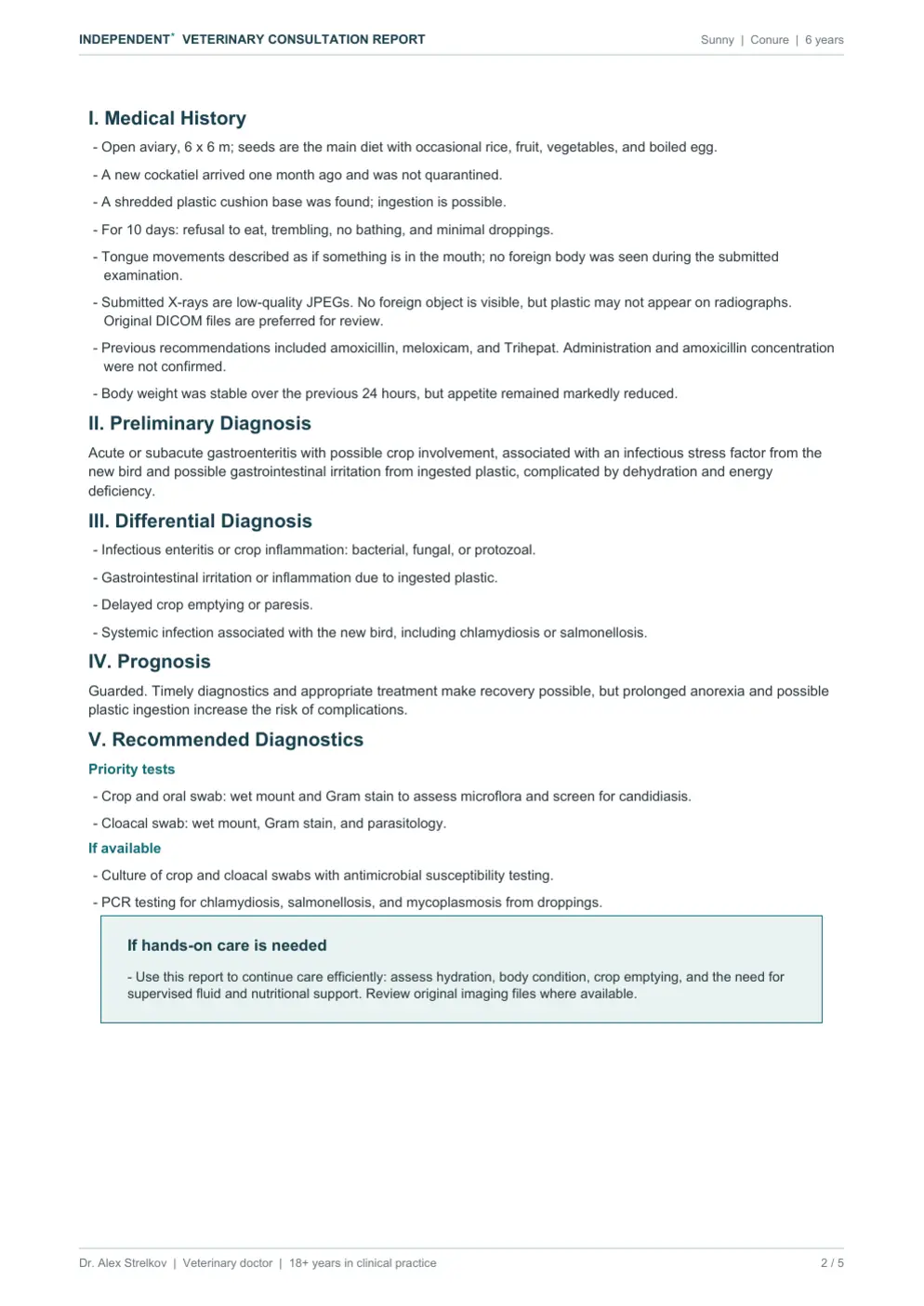
Three moments from the consultation room.
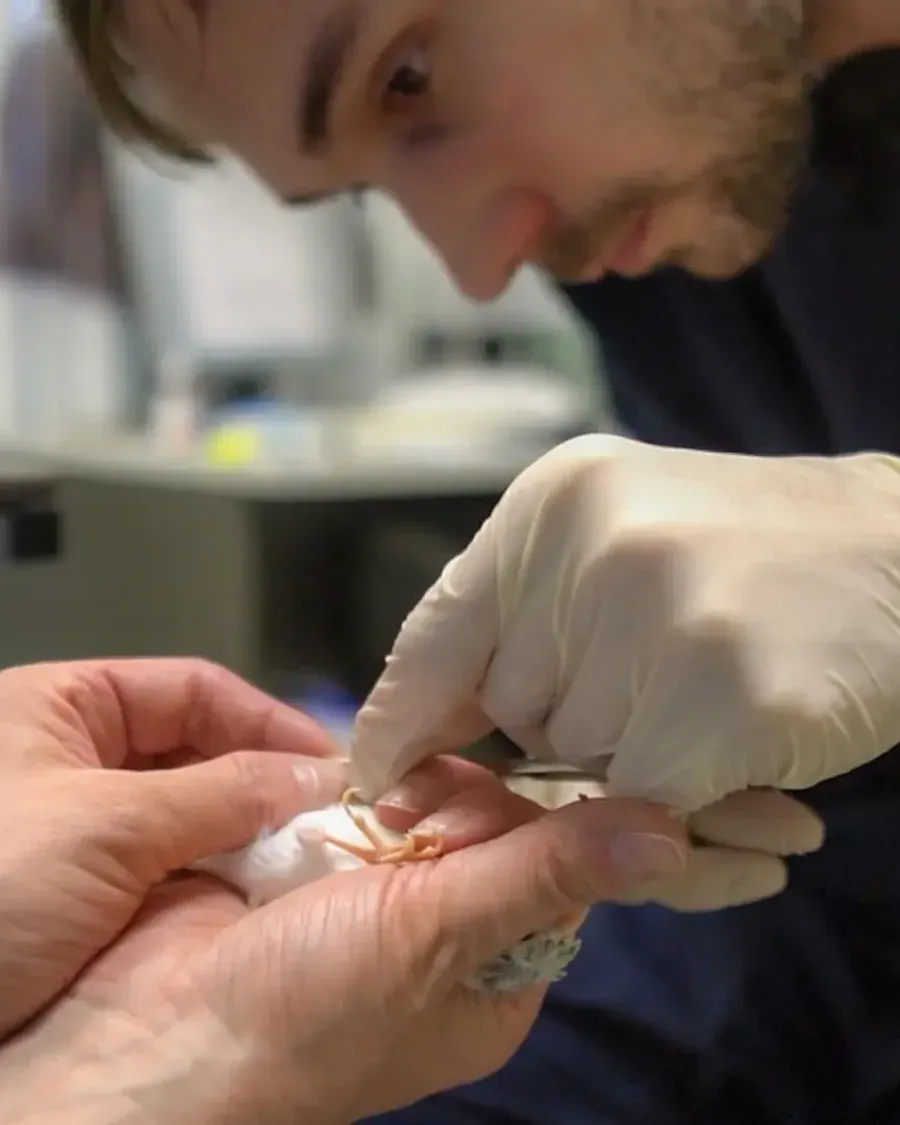
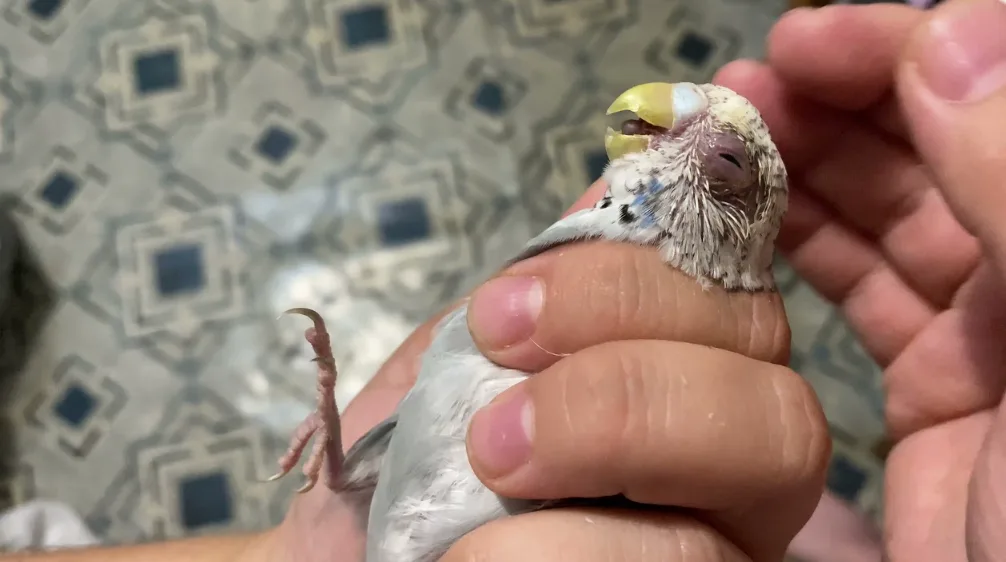
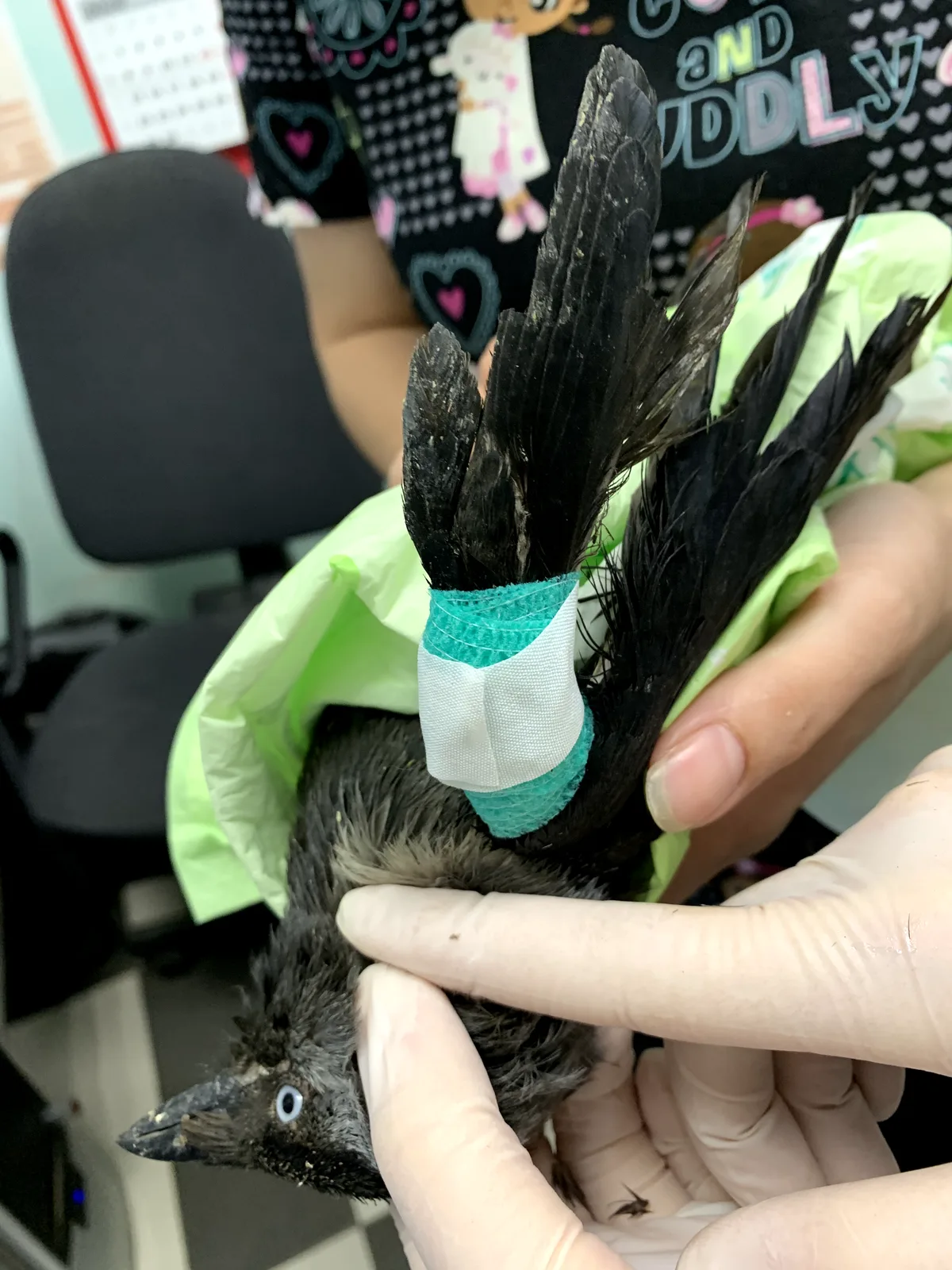
Owners arrived with a change they could not explain. These photographs show what was happening and why the next decision mattered.
Don't wait
Before → AfterThe single most common way a bird admits it is ill — and it almost never means “just tired”. Same bird on the right, after treatment.
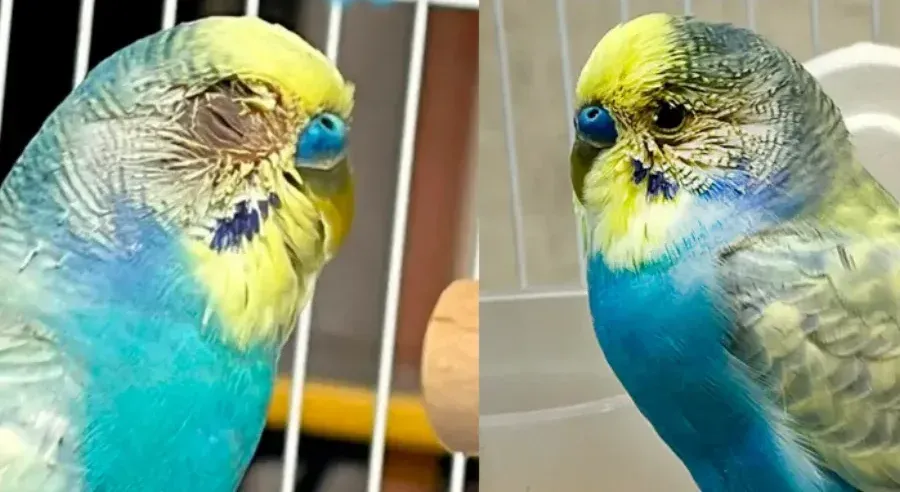 Days, not weeks
Before → After
Days, not weeks
Before → AfterUsually mites or infection, and very often dismissed for weeks as grime or a molt. Identified correctly, it clears up.
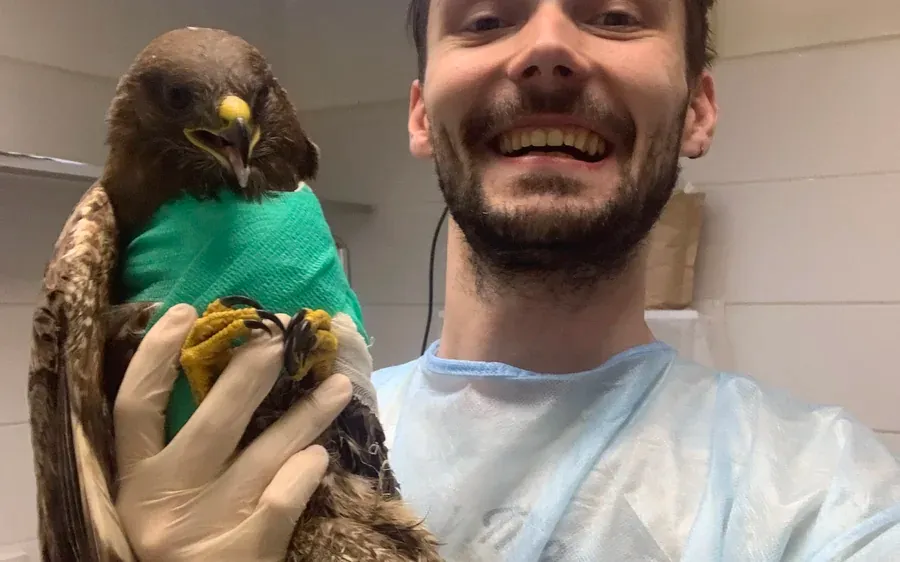 Before you do anything
Warm, dark, quiet — and no food or water. Most harm happens in the first hour. Photographs help determine whether the next call should be to a veterinarian or a wildlife rehabilitator.
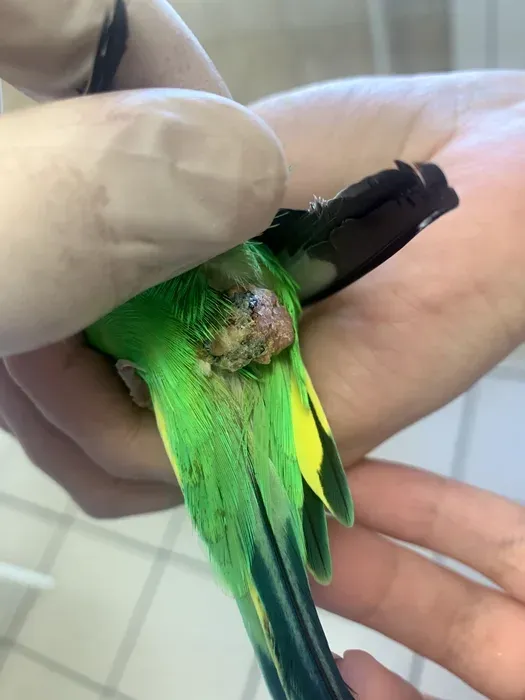 Don't wait
Tumors in birds are usually found late because plumage hides them until they are already large. Assessed early, some are operable. That window is worth not losing.
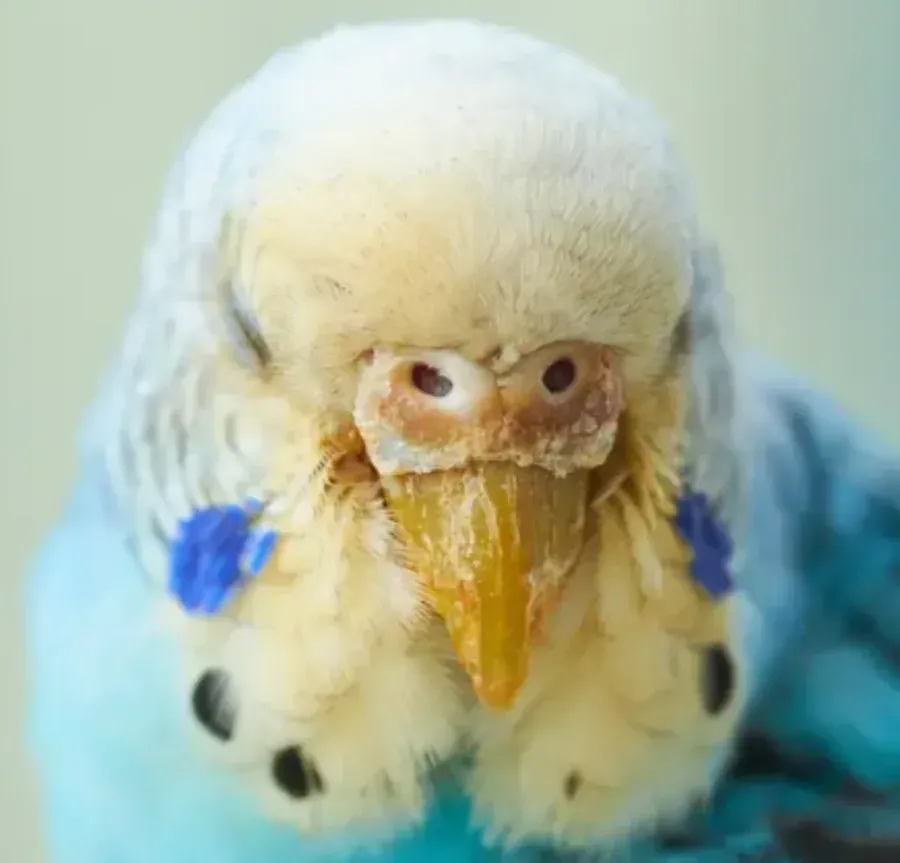 Days, not weeks
A classic presentation of scaly-face mites. The honeycomb crust can spread from the cere onto the beak and deform it permanently if left. Very treatable early, disfiguring late.
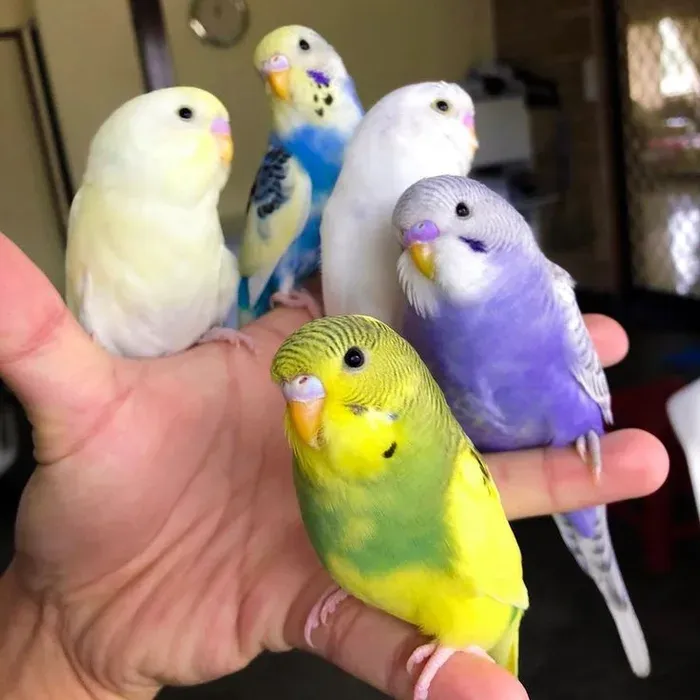 Worth checking anyway
Often the most valuable consultation of all. With a prey species, the owner's instinct that something changed is real clinical data.
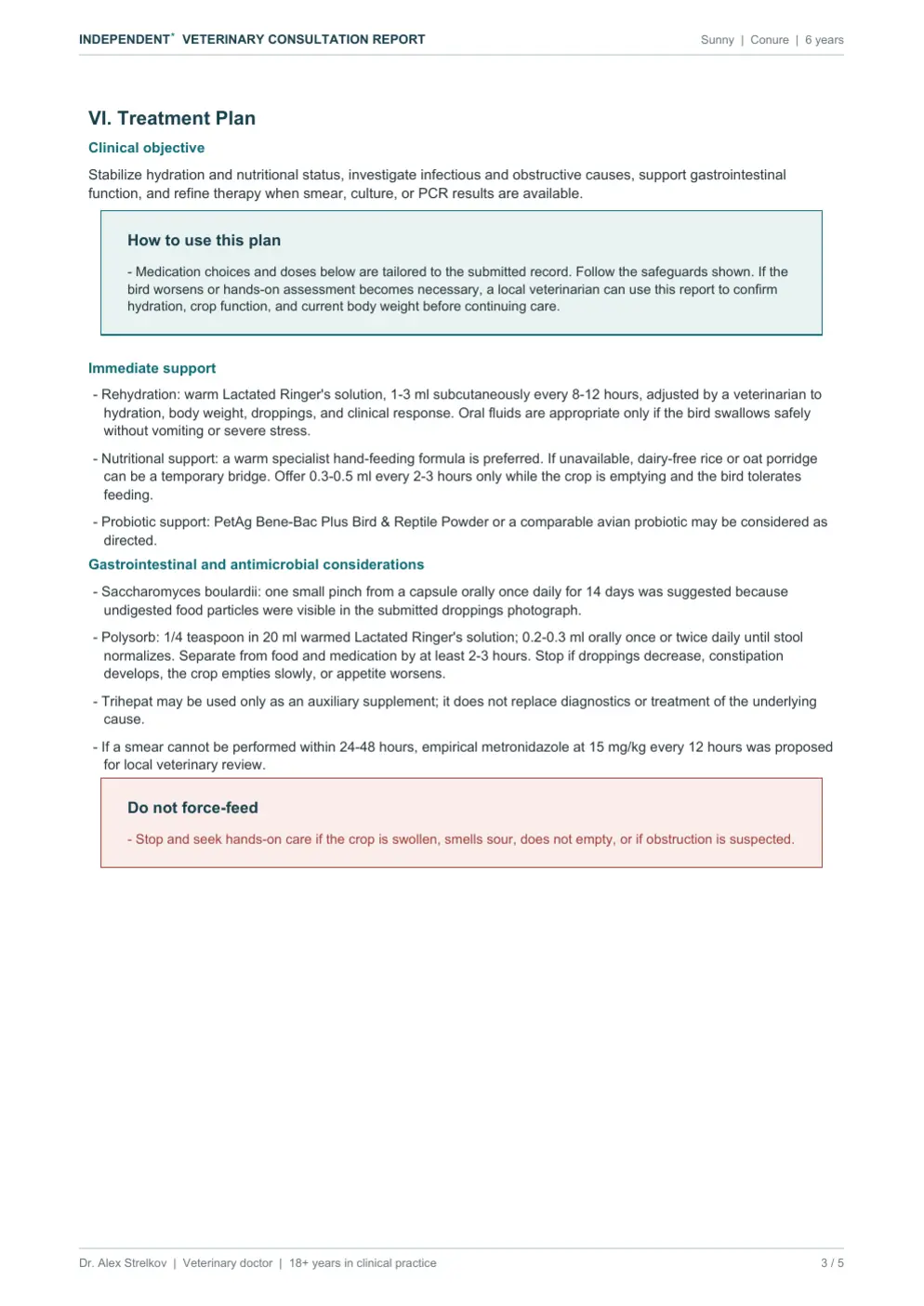
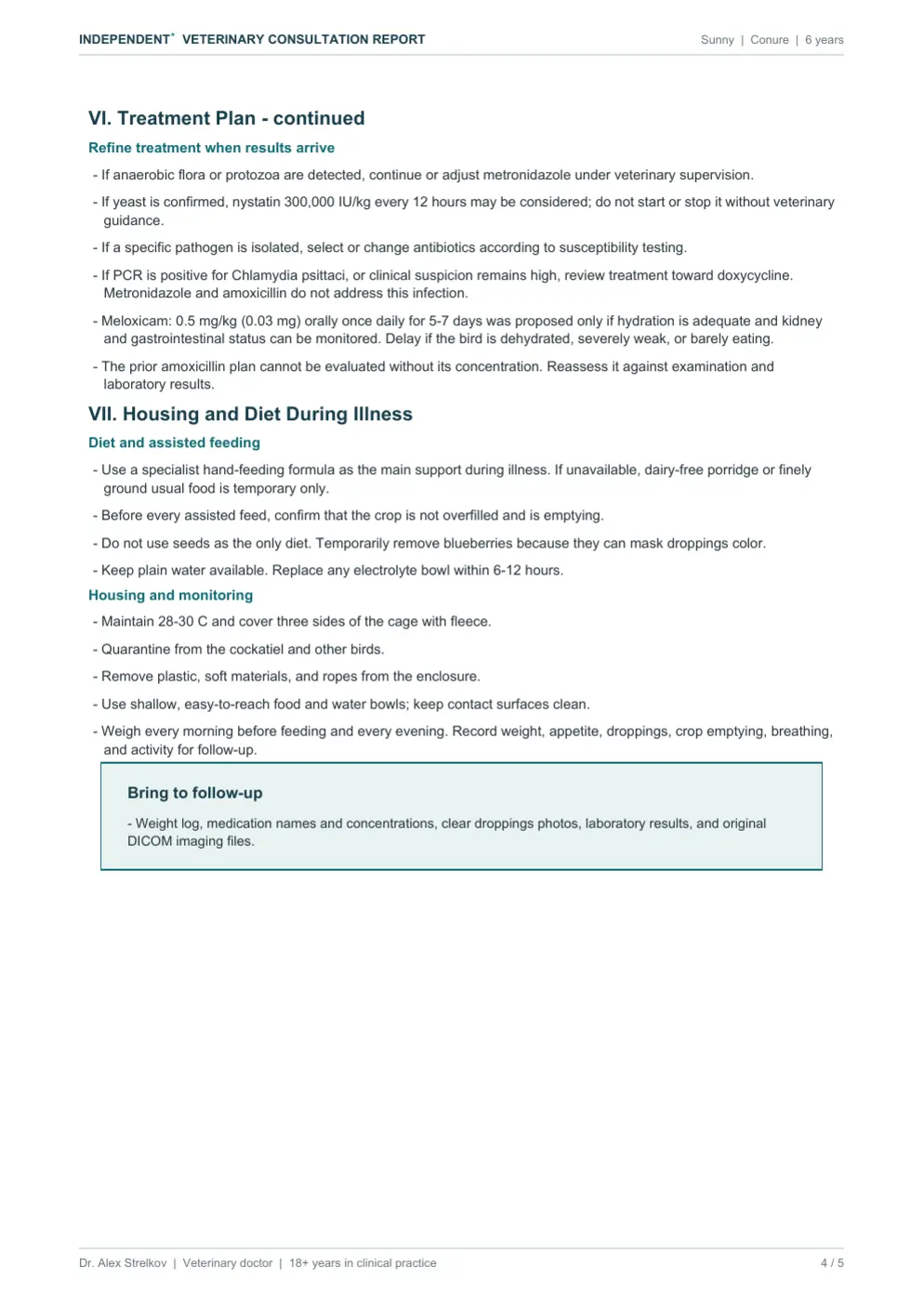
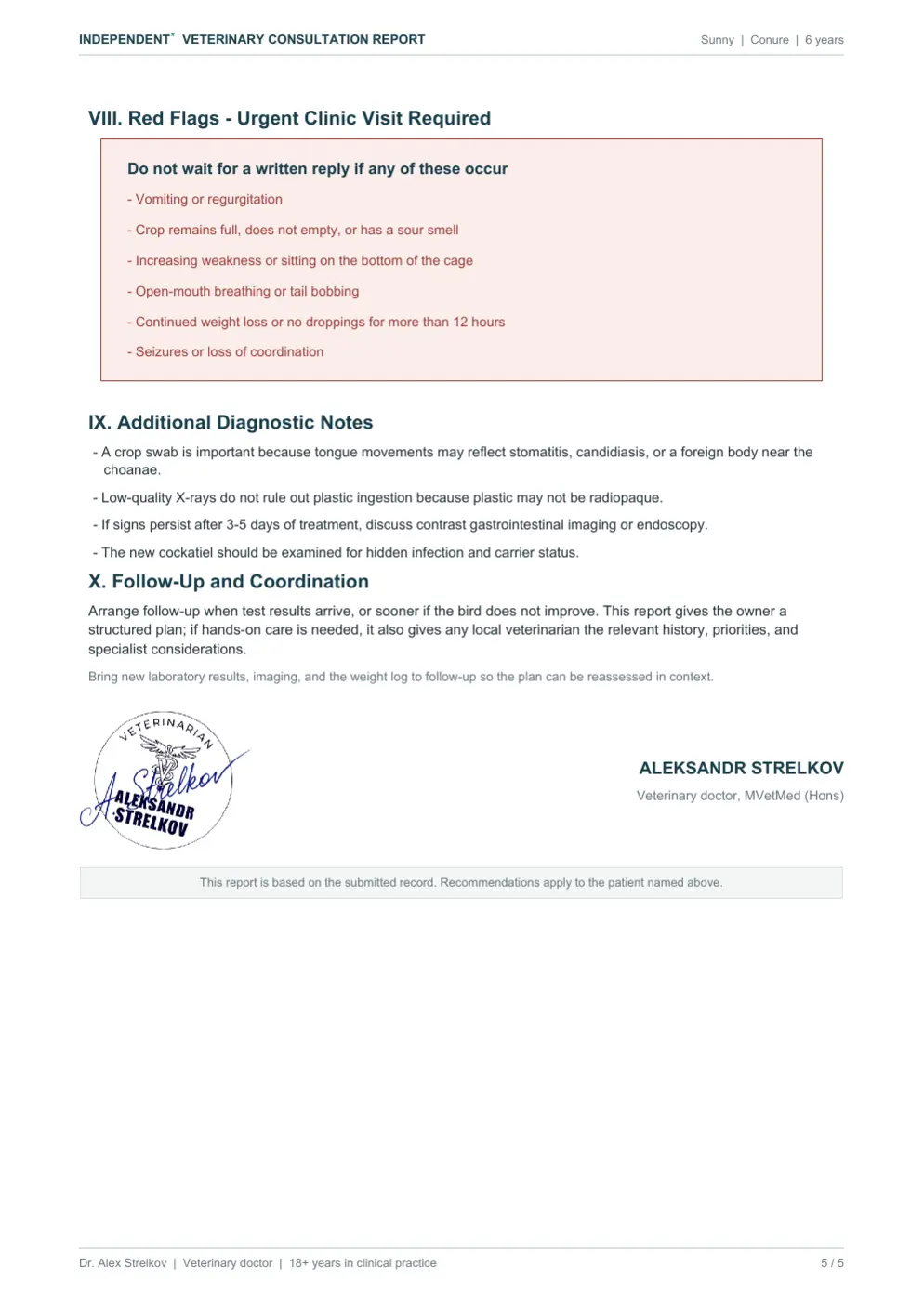
A green-cheek conure in the Gulf. His owner could not find a clinic able to work him up, so the case was run in writing from photographs, video, and the radiographs she managed to obtain locally.
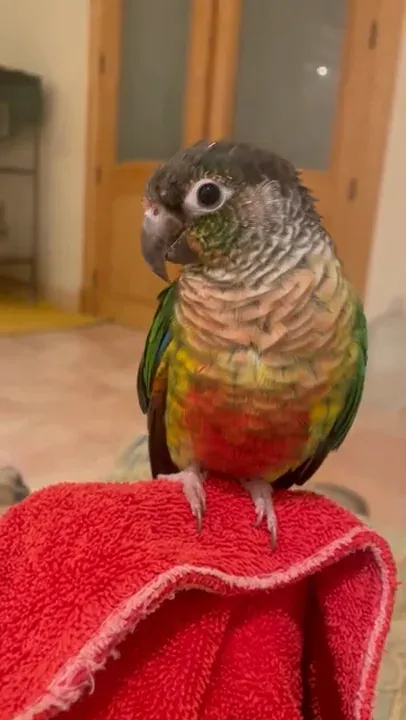
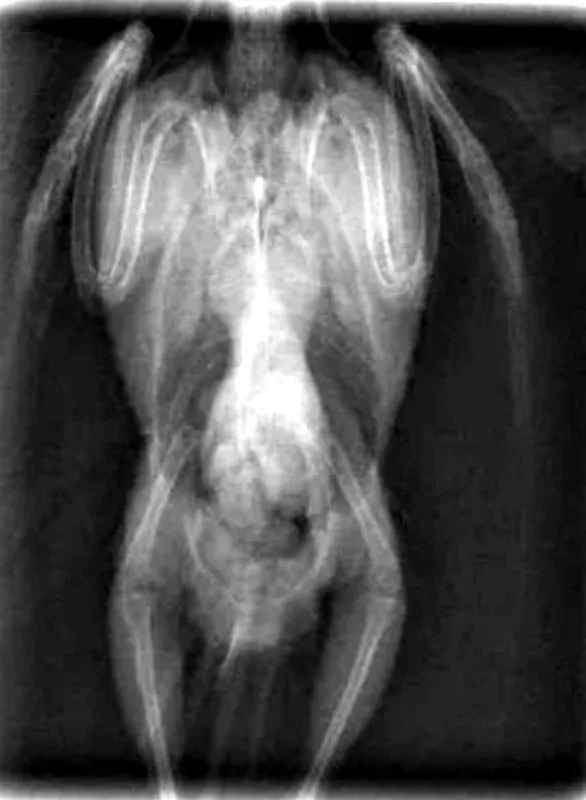
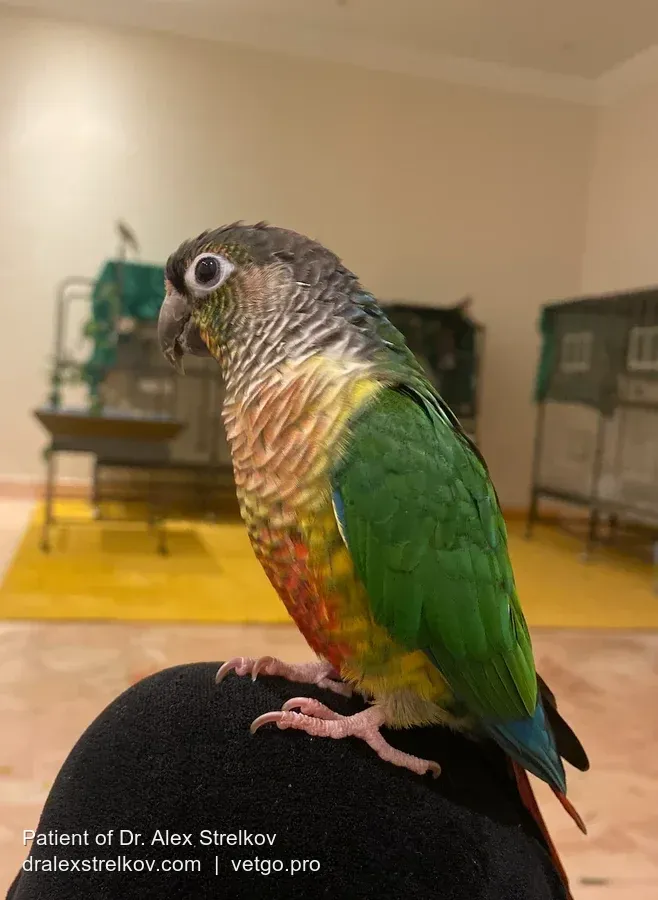
A six-year-old conure weighing sixty grams had been refusing food, trembling, and barely producing droppings. The radiographs were low-quality JPEGs interpreted differently by different people.
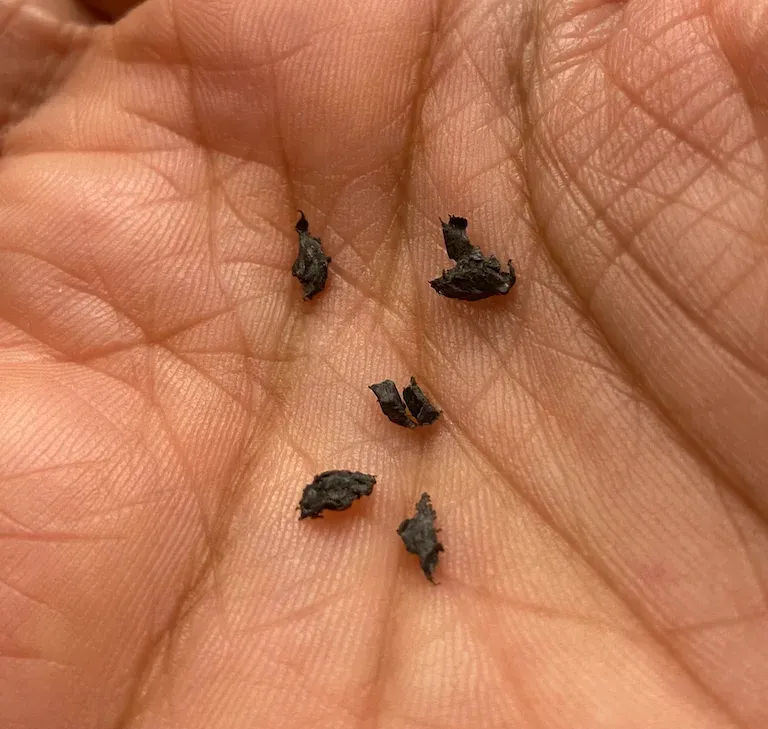
The owner had found the shredded plastic base of a cushion in the aviary. No image could confirm or exclude ingestion, so the written plan had to hold both possibilities open instead of chasing one answer.
The report ranked the working diagnosis and alternatives, named the swabs to request and what each would rule in or out, and set out supportive care, assisted feeding, and morning-and-evening weight checks.
Open-mouth breathing, tail bobbing, a crop that would not empty, or no droppings for twelve hours were among the explicit boundaries. Knowing where the line is matters at 2am.
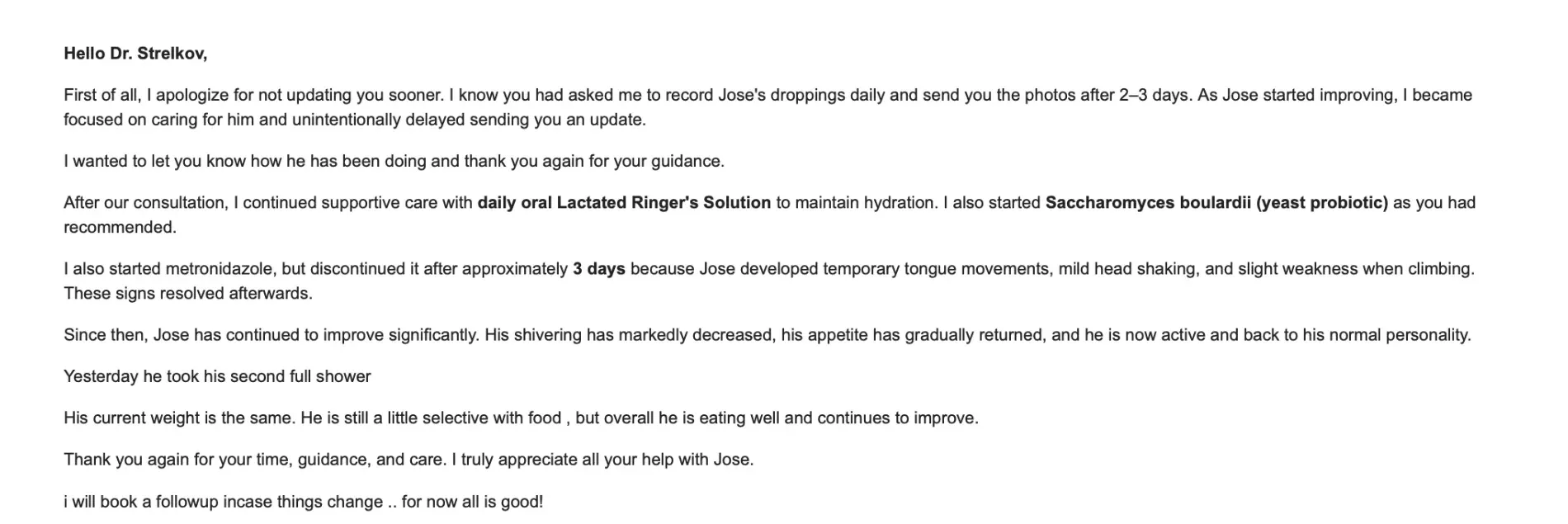
The owner wrote that the shivering had markedly decreased, the appetite had returned, and Jose was active and bathing again. The doctor also made clear that improvement did not confirm the underlying cause.
“Since then, Jose has continued to improve significantly. His shivering has markedly decreased, his appetite has gradually returned, and he is now active and back to his normal personality.”
“Please keep in mind that the underlying cause was not confirmed, so the current improvement does not necessarily mean that the problem has been fully resolved.”


One case is not a promise of outcome. Some birds are presented too late, and cases that need hands-on care are told so plainly.
Most of these can be worked up remotely with good photographs and a careful history.
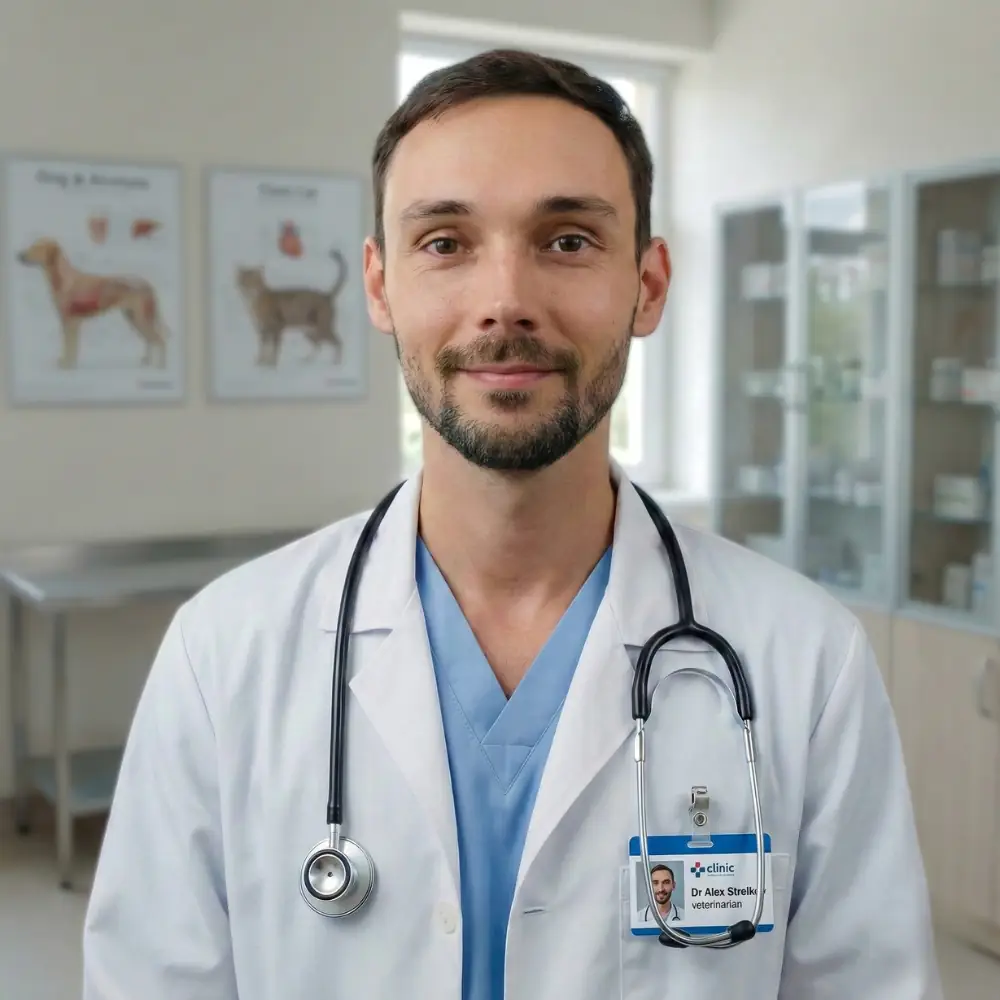
A fourth-generation physician, Dr. Strelkov graduated with honors from the K.I. Skryabin Veterinary Academy. Over 18 years he has treated hundreds of avian and exotic cases, co-authored peer-reviewed publications, taken part in international veterinary programs, and built a 500,000-subscriber audience sharing evidence-based bird health advice.
My goal is that you understand exactly what is happening with your animal and know precisely what to do next. I cannot promise miracles — but I will do everything modern veterinary science allows.
Dr. Aleksandr Strelkov
The consultation starts immediately after payment; there is no scheduling round trip or app account.
Share the first change you noticed and where you are located. This short note creates the case.
Immediately after payment, add photos, video, test results, treatment, diet, housing, and chronology.
Dr. Strelkov reviews the material personally and returns a structured opinion within 24 hours.
The doctor sees the bird at rest, reviews every answer together, and returns a report that remains useful after the consultation.
Posture, droppings, feathers, beak, and breathing are easier to compare in clear material taken at home.
Symptoms, diet, housing, previous treatment, video, and test results stay in one clinical sequence.
The conclusions, uncertainty, and next questions remain available to you and your local clinic.
Avian diagnosis is largely visual: droppings, posture, feather condition, the beak, and how the bird breathes at rest. On a video call you often get shaky footage of a bird that stops showing symptoms the moment it is watched by a stranger.
Clear photographs taken calmly at home show what is actually there. A written case also means every answer can be checked against the full history instead of being improvised inside a short appointment.
The report is written for your bird and your circumstances. It covers:
A specialist personal case review costs more than a generic remote appointment because it is a different service, with different depth and continuity.
Clear expectations matter in a remote clinical service.