How to Find an Avian Vet Near You — And What to Do If There Isn't One
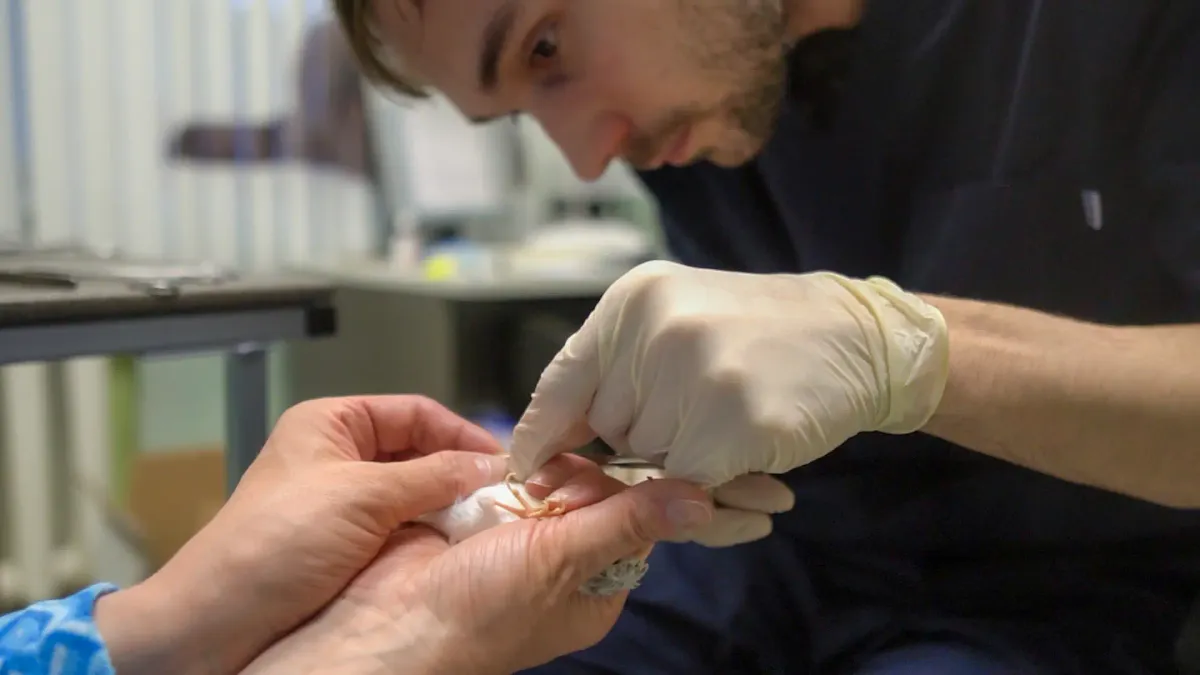
One of the most common questions I receive from bird owners is: "My parrot isn't well — where should I take him?" It sounds straightforward. In practice, it's one of the most consequential decisions a bird owner can make — because the answer depends not just on who practises in your area, but on how urgent the situation actually is, what condition your bird is in right now, and whether travelling to a clinic is even safe at this moment.
The problem no one talks about openly
In most regions — including many major cities across the US and the UK — avian vets are scarce. In some areas, there are none at all. Clinics that advertise "exotic animal care" often have very limited hands-on experience with birds specifically.
In my own practice, I regularly see the same pattern: an owner arrives after two or three visits to general clinics, where the bird was prescribed multivitamins, "supportive care," or non-specific medications — all without any diagnostics. Time has been lost. The condition has deteriorated. And now we are working in far more difficult circumstances.
So my first recommendation — before searching for the nearest clinic — is to understand what is actually happening and how urgent it is.
Why birds are nothing like dogs or cats
This sounds obvious, but it is precisely where the most dangerous assumptions are made. Veterinary training in most countries is centred on dogs and cats. Birds receive a handful of hours in the curriculum, at best. A newly qualified vet may be an excellent small animal clinician — and simultaneously have very superficial knowledge of avian anatomy, physiology, and disease presentation.
The differences are not minor. They are fundamental.
Metabolism and disease progression
Birds have an exceptionally fast metabolism. A bird that has not eaten for 24–36 hours is already under significant metabolic stress. What is "skipped a meal" for a dog is a clinical warning sign in a parrot.
Birds also conceal illness instinctively — a visibly weak individual in the wild becomes a target. Pet birds do exactly the same. By the time an owner notices that something is wrong, the bird has typically been unwell for considerably longer than it appears.
The respiratory system — why it changes everything
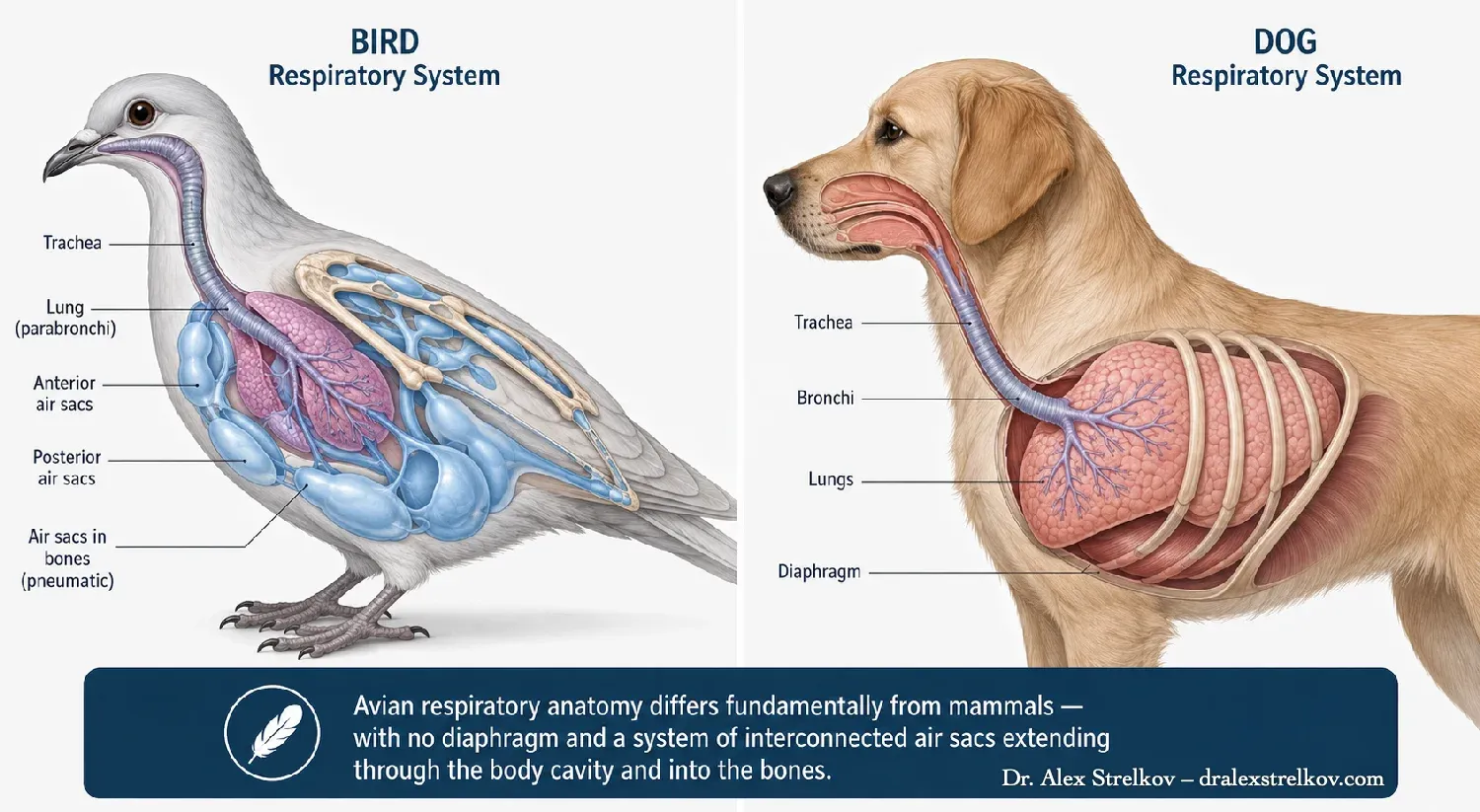
Birds do not have a diaphragm. Their breathing works through an entirely different mechanism: a system of air sacs that extend throughout the body cavity and into the hollow bones. Many owners are surprised to learn that a parrot's lungs do not expand and contract the way a human's or a dog's do — gas exchange happens as air flows through the lungs in a unidirectional circuit.
This has direct clinical consequences. Manual restraint that compresses the chest — perfectly routine when handling a cat — can fatally compromise respiration in a bird. Drug dosages, metabolic rates, and anaesthetic protocols are entirely different. A bird restrained incorrectly by an inexperienced handler can stop breathing within seconds.
A vet who does not regularly work with birds may not know this. This is not a criticism — it is a structural gap in how veterinary medicine is taught and organised. But it is something every bird owner needs to understand before choosing where to take their pet.
The journey to the clinic is not a neutral act
This is something I want to be direct about: for a sick or weakened bird, the journey to the clinic can itself be a significant risk factor — sometimes more dangerous than waiting with appropriate supportive care at home.
Consider what a standard clinic visit involves. Temperature exposure: if the outside temperature is below 20°C (68°F) and your bird is a tropical species, even a short journey without careful preparation carries a real risk of dangerous chilling. Physical stress of travel: a bird without a perch inside its carrier is constantly bracing and rebalancing, burning energy it cannot afford to lose. The waiting room: unfamiliar smells, the sounds of barking dogs, visual exposure to predator species — all of this constitutes an acute stress load for a prey animal. And the examination itself: without experience in avian handling, even a routine physical can go wrong quickly.
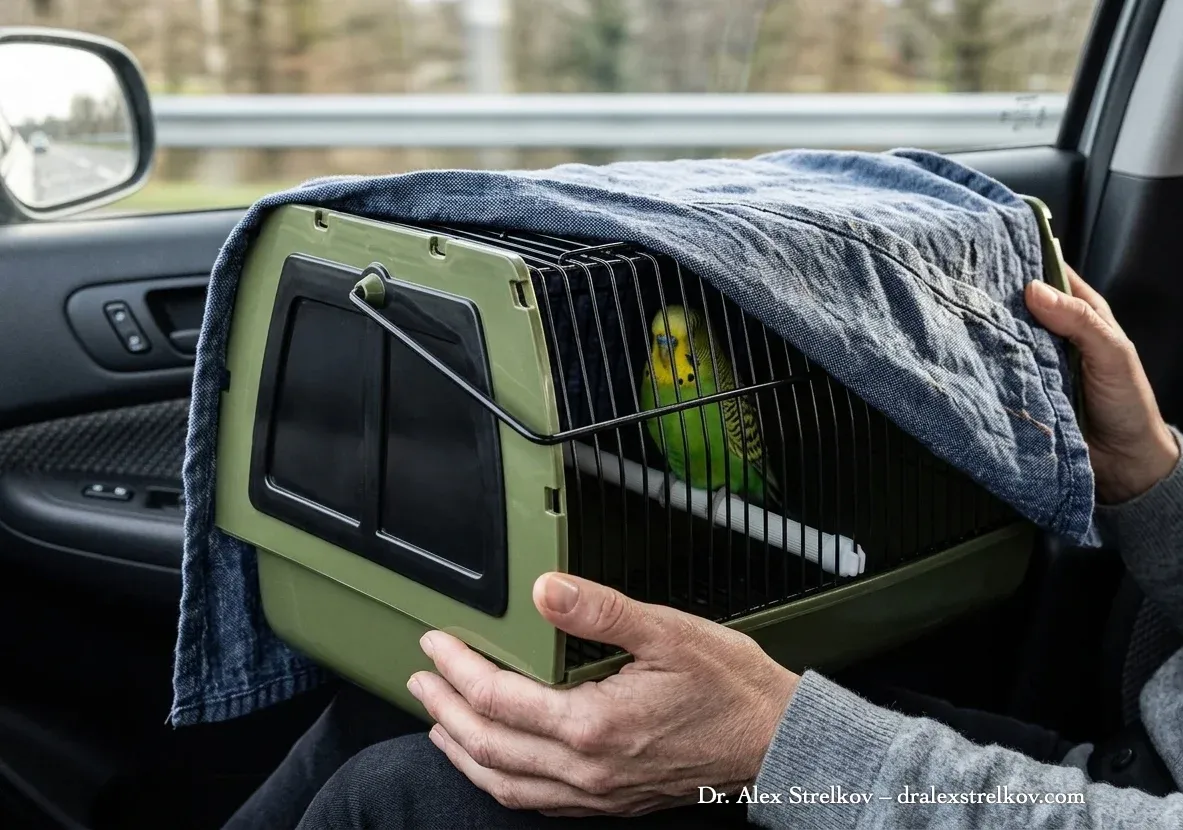
1. Use a small, enclosed carrier — not the main cage
2. Cover it to block draughts while maintaining airflow
3. Place a perch or textured surface inside — a bird sliding on a flat floor will panic and exhaust itself
4. In cold weather, warm up the car before departure, hold the carrier in your lap rather than leaving it on the seat, and ensure the temperature stays above 68–72°F (20–22°C) — use a thermometer to monitor it.
5. Go directly — no stops, no delays
A detailed guide to safe bird transport is coming soon. Subscribe below to be notified when it's published.
First: assess the situation before you do anything else
Before searching "bird vet near me," take two minutes to honestly assess your bird's condition.
This requires immediate emergency care:
- Lying on the cage floor, unresponsive or barely responsive
- Breathing with an open beak, or tail bobbing with each breath
- Unable to grip the perch
- Active bleeding, trauma, or suspected broken bone
In these situations: act immediately. Keep the bird warm, minimise handling, and seek help in parallel.
These symptoms need professional assessment — but not necessarily an urgent, unprepared trip to the nearest clinic:
- Refusing food for more than 12–24 hours
- Vomiting or regurgitation — and knowing which one you're seeing matters
- Changes in droppings (colour, consistency, volume, odour)
- Fluffed feathers, eyes closed during the day, sitting low on the perch
- Changes in vocalisation, sneezing, or laboured breathing without the acute signs above
For this second category, the most important thing is to get an accurate professional assessment first — and then decide where and whether to go.
Online consultation: often the safest and most practical first step
If there is no avian vet in your area — and for many bird owners searching "no avian vet in my area" this is simply the reality — an online consultation with an avian specialist is frequently the most sensible first step.
This is not a workaround or a compromise. It is, in many cases, the most clinically appropriate starting point.
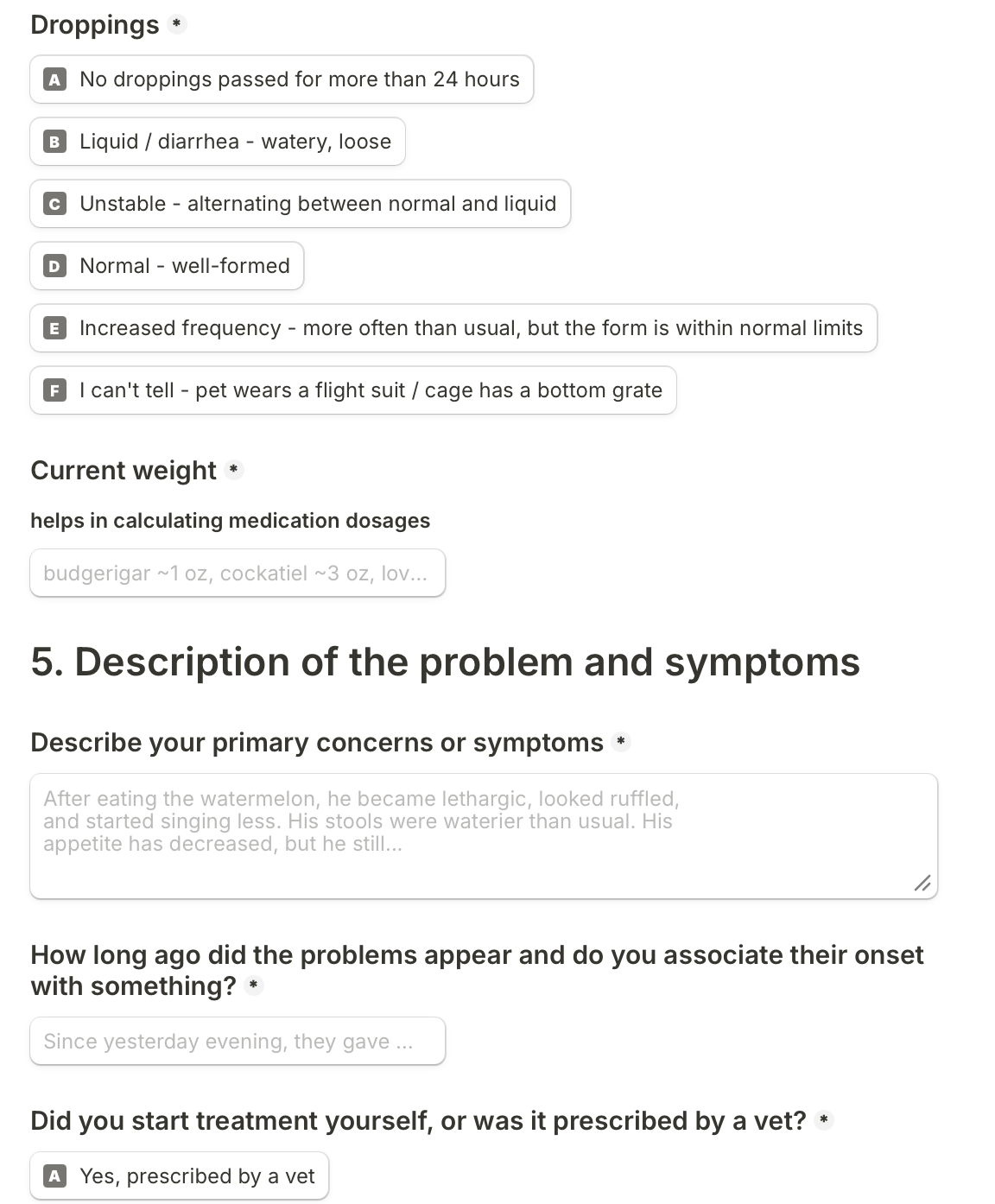
Here is what a proper avian online consultation can provide:
- Triage: an honest assessment of whether this is urgent, serious-but-stable, or manageable
- Differential diagnosis: what the symptoms are most likely indicating, based on species, age, history, and presentation
- Immediate supportive care guidance: if your bird is dehydrated, not eating, or visibly weak, supportive measures often need to begin right now — before any full diagnostic workup is possible
- A diagnostic plan: a specific list of tests and investigations that are actually indicated — not a generic panel, but a targeted protocol
- Clinic preparation: if you then go to a local clinic, you go with a clear brief — the vet there knows exactly what to look for and what to run
In my experience, this last point is consistently underestimated. When an owner arrives at a general practice with a written diagnostic plan from a specialist, the quality of the visit changes significantly. The clinician has clear guidance, and the owner is not relying on the generalist to independently know what avian workup is appropriate.
Sometimes, with the right supportive care in place, a bird's condition stabilises before a clinic visit is needed. That does not mean the underlying cause no longer matters — diagnostics are still recommended — but it changes the urgency and the risk profile of the journey considerably.
If you are dealing with a situation where there is no avian vet accessible to you, or you need parrot emergency advice from someone who works with birds every day, an online bird veterinarian consultation is available regardless of your location.
Don't wait until your beloved pet's condition worsens—get an expert assessment from a caring vet.
How to choose a clinic for an in-person visit
When an in-person visit is indicated, here is how to evaluate your options.
Where to search:
- AAV Find-a-Vet (aav.org) — the Association of Avian Veterinarians member directory
- ABVP Diplomate Directory (abvp.com) — board-certified avian specialists in the US
- ECZM (eczm.org) — European College of Zoological Medicine
ABVP and ECZM certification represents genuine advanced training: years of postgraduate study, rigorous examination, and regular recertification. It is a reliable signal of specialist-level competence. That said, the absence of formal certification does not automatically mean an inexperienced clinician. In many countries, postgraduate certification systems are structured differently, and there are vets with genuine depth of avian experience who do not hold these specific credentials. What matters most is actual, consistent, hands-on experience with birds — not a certificate alone.
Questions to ask before booking:
- How many avian patients do you see per week? (A few per month is not a specialist practice)
- What is your protocol for after-hours avian emergencies? (There should be a specific answer — not "we'll figure it out")
- Do you have a separate hospitalisation area for birds?
- Which laboratory processes your avian samples — and do they routinely handle avian bloodwork?
A question worth asking indirectly:
Ask what the vet would recommend for a bird presenting with diarrhoea. If the first answer involves multivitamins or non-specific supplementation without any mention of diagnostics, treat that as a warning sign. Prescribing a broad vitamin complex for a symptomatic bird — rather than investigating the cause — typically reflects uncertainty, not a treatment plan. Targeted supplementation, such as B12 in specific clinical contexts, is another matter entirely. The concern is reflexive, undifferentiated prescribing.
A practical decision framework
Step 1 — Assess severity. Is your bird showing acute emergency signs (on the floor, open-mouth breathing, trauma, cannot grip perch)? If yes: keep warm, minimise handling, seek help immediately.
Step 2 — If not acute. Do not rush to the nearest clinic. The risk of an unprepared journey to a practice with no avian experience often outweighs the benefit.
Step 3 — Get a specialist assessment first. An online consultation gives you triage, a likely diagnosis, immediate supportive care guidance, and a targeted diagnostic plan.
Step 4 — Go to clinic prepared. With a written brief and specific investigations outlined, a visit to any competent clinic becomes significantly more productive — even if they are not avian specialists themselves.
Dr. Alex Strelkov is an avian and exotic animal veterinarian offering online consultations for bird owners worldwide. To book a consultation, please fill out the form below. After payment, you will receive a questionnaire designed to help you describe your bird's condition and concerns in as much detail as possible.