Parrot Vomiting: When Internet Advice Can Cost Your Bird Its Life
Your parrot is vomiting. You Google it. You find a forum. You try something. Two days later, the bird is worse. This is the pattern that kills parrots — and it's completely avoidable. Here's what you actually need to know.
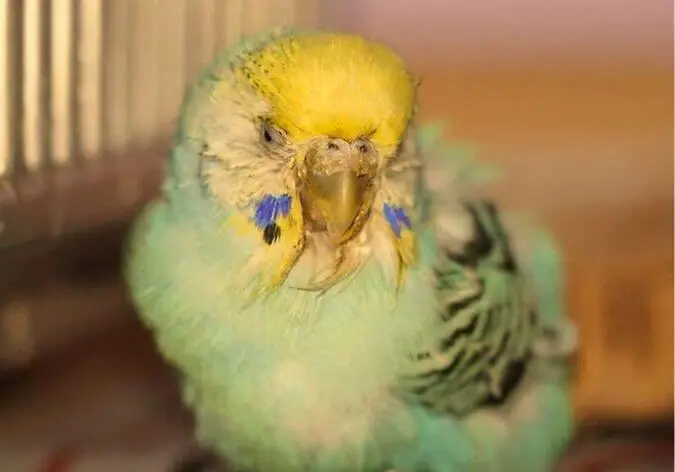
Avian veterinarian • 8 min read • Could save your parrot's life
Noticed your parrot vomiting and your first instinct was to Google it? Stop. Over twenty years of practice, I've seen too many tragic outcomes when owners follow "folk remedies" from forums instead of consulting a specialist. The difference between the right and wrong response is often measured in hours of your pet's life.
Check the severity of your parrot's condition: Take our free vomiting danger assessment test — it takes just 2 minutes and will help you understand whether emergency care is needed.
👇🏼👇🏼👇🏼
Vomiting in parrots can be a symptom of many conditions — from simple indigestion to life-threatening infections. But the real problem isn't the complexity of diagnosis; it's that most owners confuse normal behavior with pathology, and when help is genuinely needed, they lose precious time on self-diagnosis.
Why Internet Diagnosis Is Dangerous
Every week I see owners who spent several days "treating" their birds based on internet advice. The result is predictable: the bird's condition worsens, time is lost, and sometimes nothing can be done.
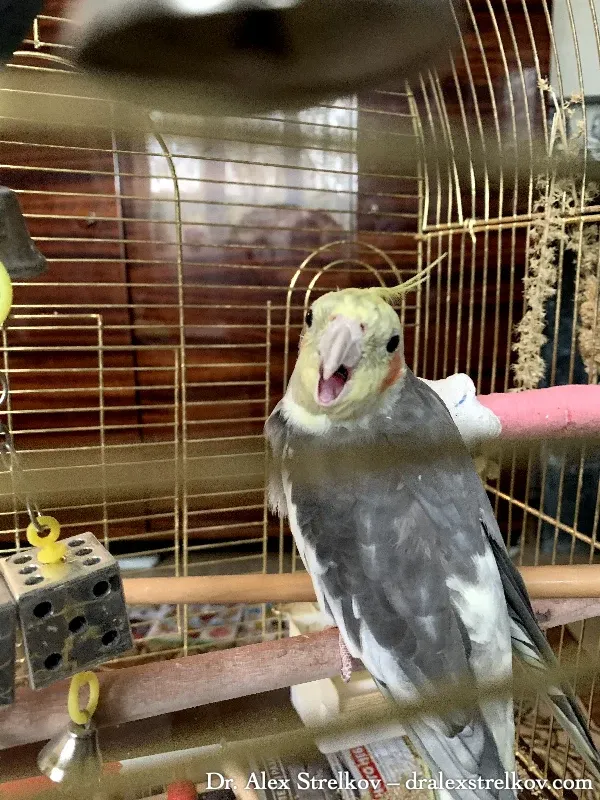
A recent case: an owner spent three days giving her parrot "natural remedies" for vomiting she'd found on a forum. By the time the bird reached me, I diagnosed crop stasis with complications. Had she come immediately, treatment would have taken 2–3 days. Instead, emergency intervention and prolonged rehabilitation were required.
The core problems with self-diagnosis in parrots:
Loss of time — many conditions require immediate intervention. When a parrot is vomiting, every hour can be critical.
Misreading symptoms — 70% of owners confuse regurgitation with vomiting. These are fundamentally different processes requiring completely different approaches.
Dangerous self-treatment — medications for humans can be toxic to birds. What helps a person with nausea can kill a parrot.
Missing serious illness — symptoms of proventricular dilatation disease, infections, and poisonings often look identical to simple digestive upset.
Important: Birds have no such thing as a "mild" gastrointestinal illness. What looks like a simple upset can be the beginning of a fatal process. Correct diagnosis is only possible through professional examination.
Vomiting vs Regurgitation: Key Differences
The first thing to understand: regurgitation in parrots is completely normal. It's a natural way of feeding a partner or chicks, and in captivity — an expression of affection toward the owner.
Normal regurgitation in a budgerigar:
The bird calmly lowers its head, makes characteristic rhythmic neck movements, and neatly brings up partially digested food. The behavior is directed — the bird "feeds" a specific object: a mirror, a toy, or a person.
Pathological vomiting in a parrot:
The bird sharply shakes its head from side to side; food is sprayed chaotically; the parrot looks lethargic and depressed. Vomiting is never directed at an object and is often accompanied by a sour smell.
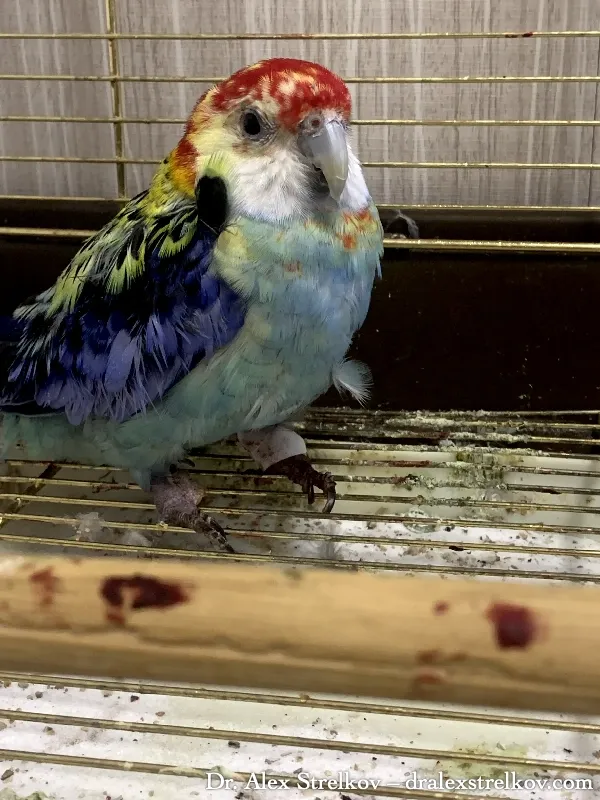
Key differences that only a specialist can properly assess:
Content consistency and smell — during vomiting, the material is more liquid, with a characteristic sour odor.
Frequency and timing — vomiting occurs randomly; regurgitation happens in specific situations.
Accompanying symptoms — vomiting is often paired with lethargy and loss of appetite.
Behavioral context — regurgitation is linked to social behavior; vomiting is linked to illness.
Can't tell the difference on your own? A triage assessment from a qualified avian vet can rapidly clarify the severity of the situation and whether emergency care is needed.
Serious Causes of Vomiting in Parrots
Crop stasis (sour crop)
The most common cause of true vomiting in parrots. Food stays in the crop longer than it should, leading to fermentation and bacterial infection. Without treatment, this leads to death within 24–48 hours. Particularly dangerous for budgerigars and cockatiels.
Proventricular Dilatation Disease (PDD)
PDD is a fatal infectious neurological disease caused by avian bornavirus, affecting more than 50 parrot species. The disease is characterized by dilation of the proventriculus due to impaired intestinal motility. Current research suggests 30–35% of all birds may be infected.
Toxicosis and poisoning
Poisoning from nicotine, avocado, chocolate, or heavy metals develops rapidly. Amazon parrots with lead poisoning develop gastrointestinal disorders including vomiting. Time for intervention is measured in minutes.
Infectious diseases
Gram-negative bacteria are among the most common causes of vomiting, especially in small birds. Trichomonas infections are also dangerous, particularly in budgerigars, as is candidiasis.
Critical: Birds presenting with vomiting alongside other symptoms — diarrhea, loss of appetite, lethargy — require immediate attention. Attempts at self-treatment frequently make the condition worse.
What Professional Diagnosis Involves
Accurate diagnosis of vomiting requires a comprehensive approach that is impossible at home:
Laboratory testing
Gram-stained fecal analysis allows assessment of intestinal microflora and identification of pathogenic microorganisms. This baseline test provides key information about the state of the digestive system.
Imaging
Barium radiography can demonstrate proventricular dilation, helping diagnose PDD and other structural changes. A proventriculus-to-keel ratio above 0.52 indicates pathological dilation.
Molecular diagnostics
PCR testing for bornavirus can be performed on blood samples and cloacal and choanal swabs, allowing detection of infection at an early stage.
In my practice, correct diagnosis in 90% of cases requires a combination of several methods. No single symptom is pathognomonic, so relying solely on external signs is extremely dangerous.
Benefits of Online Consultation
I understand the skepticism: "Can an online consultation really replace an in-person visit?" In most cases — yes, and here's why it's often the better choice:
Saving critical time
While you're searching for a clinic, transporting your bird through stressful travel, and waiting in a queue, 3–4 hours can pass. In that same window, I can conduct a detailed consultation, assess the bird's condition from video and photos, and provide specific first-aid recommendations.
Reducing stress for the bird
Transport and a clinic visit are enormous stress for a parrot — and for a weakened bird, the journey itself can be a serious risk. Travel causes distress in many birds and can itself trigger regurgitation of food. An online consultation allows the bird to receive care in its familiar environment.
Access to a real specialist
Most general veterinary clinics don't have avian specialists. Vets who don't specialize in birds tend to miss important details when making a diagnosis. They often hastily diagnose a crop infection without further workup and prescribe antibiotics that aren't always effective.
Quality symptom assessment
From a good-quality video and detailed description, an experienced avian vet can:
- Accurately differentiate vomiting from regurgitation
- Assess the degree of life threat
- Prescribe the correct first aid
- Determine whether emergency in-person examination is needed
- Create a plan for further workup
When an in-person visit is necessary
There are situations that require immediate in-person examination: suspected intestinal obstruction, crop lavage, biopsy, or surgical intervention. But only a specialist can determine this need after an initial assessment.
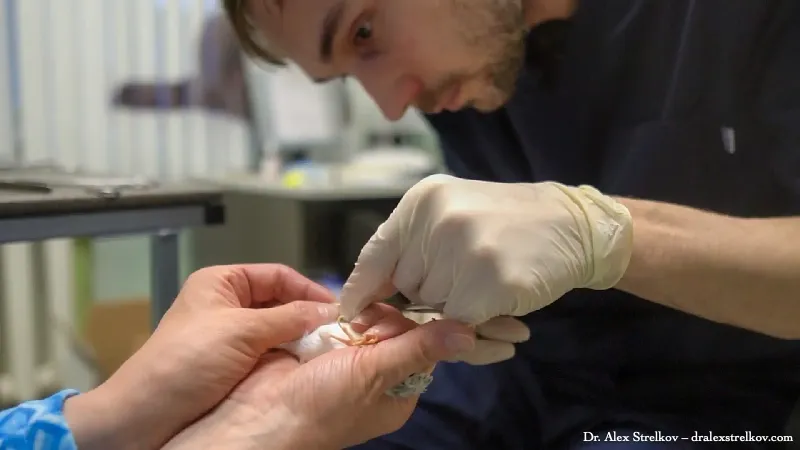
Stop stressing about your bird's health with 24/7 online avian vet care
Prevention and Care
First aid if your parrot is vomiting
Proper nutrition is the foundation of a parrot's health. Sudden dietary changes can stress the gastrointestinal tract and trigger vomiting. Use quality pelleted feeds, not only seed mixes.
Maintain a clean cage and change water regularly. Poor cage hygiene, irregular deworming, and abrupt dietary changes all increase the risk of vomiting.
Avoid toxic foods: avocado, chocolate, coffee, nicotine. Keep cleaning products, insecticides, and toxic plants out of reach.
Main risk factors
- Improper feeding and abrupt dietary changes
- Stressful situations and environmental changes
- Infectious diseases and parasites
- Poisoning from household chemicals or toxic plants
- Internal organ disease
Key Takeaway
Vomiting in parrots is always a serious symptom requiring professional assessment. Internet forums, general vets without avian specialization, and self-treatment are a path to wasted time and a worsening condition.
An online consultation with an experienced avian specialist is the optimal solution — combining speed of care, professional diagnostic depth, and minimal stress for the bird.
Don't search forums for answers. Reach out to a qualified avian vet now.